

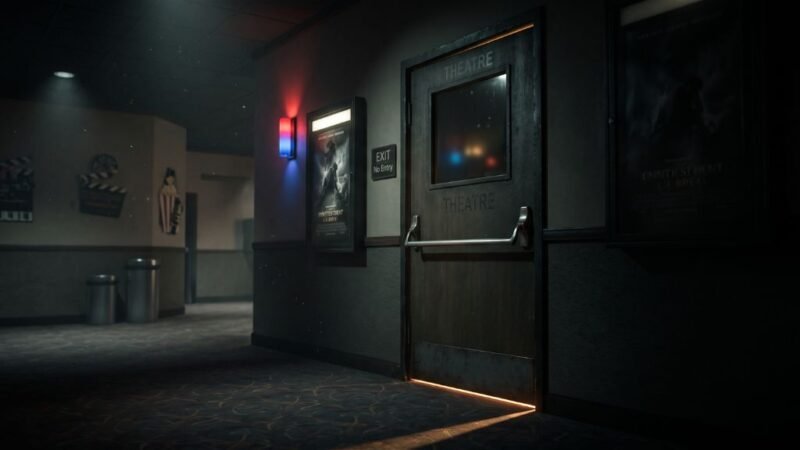


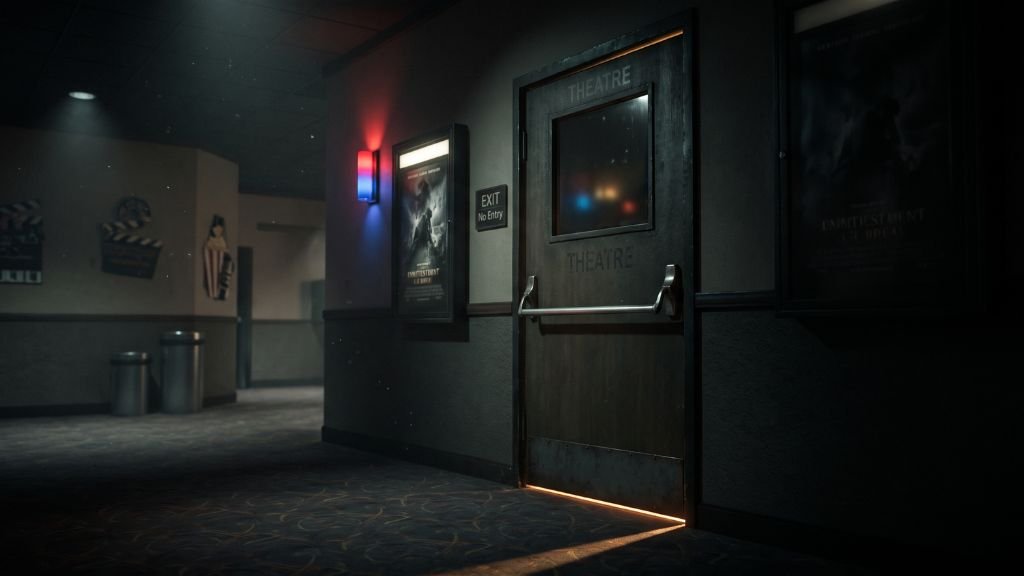
A strip of light escapes beneath a closed cinema door. Somewhere beyond it, a projector starts, although the corridor is empty. That is the entire premise of a short fictional suspense scene I would like to develop: no villain reveal, no chase, and no explanation of who might be inside. The tension comes from waiting for a familiar place to do something slightly unexpected.
I would treat this as a filmmaking exercise rather than a trailer for a real release. The setting could be designed from an original photograph of a plain corridor and a separate reference for an old theater door. A muted red wall, a brass handle, and a narrow band of warm light would give the scene enough identity. Posters and recognizable film artwork would stay outside the frame so that the experiment has its own visual world.
The question for seedance 3.0 is how little movement the scene can sustain while still feeling alive. Its video-generation workflow can combine a written direction with visual references, allowing the corridor’s appearance and the intended camera movement to be described together. I would begin with the door closed and ask for a gentle approach, stopping well before the handle. The door itself would remain shut throughout this first attempt.
Suspense begins with a clear piece of geography
Before generating the shot, I would sketch the corridor’s arrangement in words. The door is at the far end, a wall lamp sits to the left, and the camera begins low enough to see the light beneath the threshold. Those relationships should be simple to recognize immediately. If the viewer has to work out which opening matters, the quiet beginning becomes confusion rather than anticipation.
My seedance 3.0 prompt would emphasize a fixed door frame, unchanged wall surfaces, and a slow forward camera move. I would avoid asking for darkness to swirl, shadows to form faces, or objects to appear in the distance. Those effects introduce a different kind of horror and make the scene harder to judge. A plain corridor gives the audience a stable baseline against which one small change can become significant.
The first review would focus on the geometry. A brass handle that slides across the door or a skirting board that bends during the approach could accidentally look like a supernatural event. If that happens, I would reduce the camera travel and provide a cleaner reference rather than pretend the defect is part of the story. The audience should notice the change I intended, not a random instability in the generated setting.
The light changes before anything else does
Once the corridor holds together, I would create an alternate version in which the strip of light grows slightly brighter near the end. That is the scene’s single visual event. In seedance 3.0, I would describe it as a restrained increase from the room beyond the door, keeping the wall lamp and the rest of the corridor steady. The effect should suggest that equipment has started inside, not that a portal has opened.
A useful revision might make the light change later. If it brightens as soon as the shot begins, there is no period of expectation. I would hold the initial state for longer in the edit, then let the change arrive close to the point where the camera stops. The rhythm is a small promise followed by a smaller answer: something is happening inside, but the viewer still does not know what.
I would also compare a completely static version. Sometimes a forward move tells the audience too insistently where to look. A still composition can make the viewer search the frame and discover the light themselves. The better choice depends on the scene’s intended pace, so I would put both versions against the same temporary soundtrack. That comparison tests a storytelling decision rather than simply choosing the clip with more motion.
Build the sound around an unseen projector
The sound would begin with the ordinary quiet of an empty interior: a faint ventilation hum and distant room tone. I would then introduce a recorded or licensed mechanical projector sound, keeping it soft enough to feel as though it comes through a closed door. I would not borrow recognizable dialogue or music from an existing film. The unseen screening can remain entirely fictional and still provide a convincing reason for the light.
An audio reference could help establish the desired atmosphere during seedance 3.0 video generation, but the precise entrance of the projector would be controlled in the final edit. I would align its first mechanical movement slightly before the light brightens. That order lets the ear prepare the eye. A loud impact at the same moment would push the piece toward a jump scare, while the intended scene is about curiosity that gradually becomes unease.
For the ending, I would cut to black before the handle moves. Leaving the door unopened protects the strongest question in the scene. It also avoids adding a human figure, an interior room, and a reveal that the short setup has not earned. The projector can continue briefly over black, giving the audience a final moment to imagine the space beyond the corridor.
Keep the experiment small enough to compare honestly
Before expanding the scene into a longer sequence, I would review seedance 3.0 pricing and decide what generation budget fits this limited exercise. The useful variations are specific: moving camera versus static camera, and early versus late light change. I would not spend that budget on unrelated locations or increasingly elaborate effects. Each version should answer a question about the same closed door.
The final seedance 3.0 selection would be checked at normal playback speed and with the sound muted. Without audio, the corridor still needs a readable focal point; with audio, the projector should feel located behind the door. Any title or credit would be added afterward as ordinary typography. I would keep the presentation clear that this is a fictional generated scene, especially if sharing it beside discussions of actual films.
What interests me about this exercise is its refusal to explain too much. A door, a sliver of light, and a sound can carry a complete miniature progression when their timing is deliberate. The finished piece would not claim to replace a film crew or reproduce a famous director. It would offer a practical way to explore one cinematic choice: how to make an audience lean toward a room they never get to enter.
About The Author

Winston
author
With 8+ years of digital marketing experience, I specialize in driving growth for both B2B and B2C clients through targeted, data-driven campaigns. I have a strong focus on SaaS product growth and expertise in SEO, SEM, SMO, remarketing, and third-party review platforms. I’ve successfully supported businesses across industries including finance, entertainment, restaurants, IT services, SaaS, education, manufacturing, real estate, and travel. Let’s connect to explore how I can help achieve your marketing goals.